
Case Study
Global Mediation
SEND mediation meetings set up by an AI engine that works to the firm's own policy and to each local authority's rules.
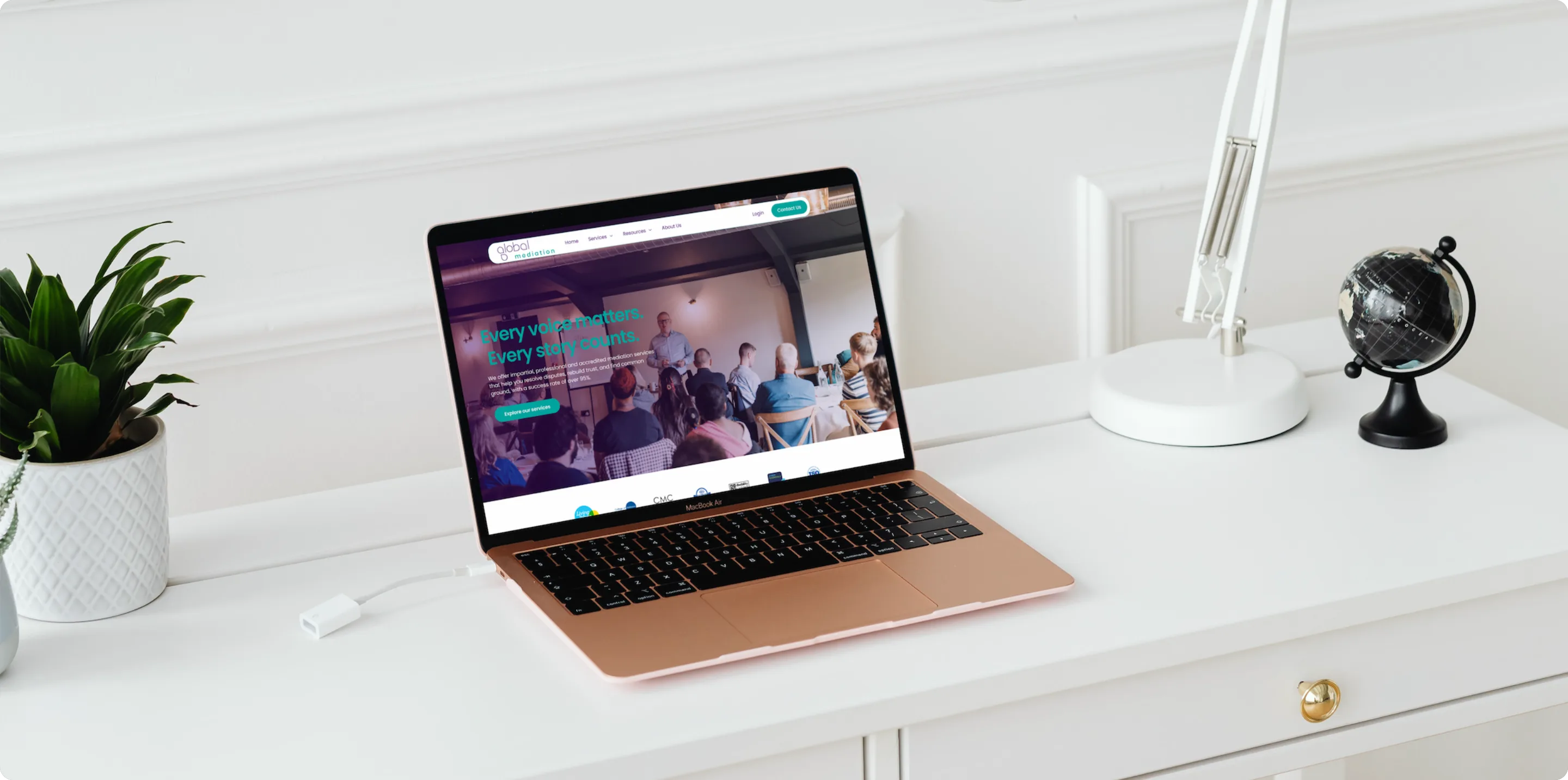
About Global Mediation
Global Mediation has been mediating in the United Kingdom since 1999. It began with a simple idea: that people deserve better ways to resolve conflict. Twenty-five years on it delivers thousands of mediations a year for local authorities, businesses and individuals, from a London head office with a national team. It works across community, civil and legal, workplace, business, family and SEND disputes, and trains mediators too. It is accredited by the Civil Mediation Council, and holds ISO 9001, ISO 27001 and Cyber Essentials. It reports that 95% of its mediations reach full or partial resolution.
SEND mediation is the part of the business this work touched. When a family and a local authority disagree about an Education, Health and Care Plan, a school placement or the support a child receives, mediation is how they try to settle it before a tribunal. Getting the meeting in the diary is its own job. A date has to suit a parent, the child or young person, the local authority officer, the school's SENCO and one of Global Mediation's mediators, and it has to be found while a family is already waiting on a decision about their child's education.
Bitcube built the engine that does that, from January 2024.
The Challenge
Setting up a mediation is a negotiation, not a lookup. Availability arrives one reply at a time over days, from five kinds of participant who do not know each other's diaries, and the engine had to run that exchange to a confirmed date or hand it to a person having tried. It could not work to one rulebook either. Global Mediation's own policy sets the notice periods, the rescheduling limits and the charges, and each local authority area adds rules of its own on top, so the rules had to be data the business could change rather than logic in a release. The cases themselves lived in Global Mediation's case management system, which had to stay the single record while the engine held the state of a negotiation that system knew nothing about. The correspondence was written by a third-party AI service that returns free-form text, so its output had to be constrained before anyone would call it an email — and the people receiving those emails were parents, children and young people in the middle of a dispute about a child's education, where a wrong or badly timed message is a harm rather than a defect. None of that could be proved by unit tests. A conversation running for days across five parties had to be demonstrated end to end, repeatedly, before a live case went near it.

Our Solution
Phase 1 — The engine, with the AI held behind a boundary
The first weeks built a .NET 8 API on Azure and an Angular 17 portal for the staff who run mediations: users, mediator availability, and later the settings and reporting pages. The AI service sat behind a client class of its own, so the engine owned the state of every mediation — participants, offers, replies, confirmed dates, and eight states from created through to finalised, failed to schedule or handed to a person — and the assistant was only ever asked for wording. That boundary is what made everything after it testable. Contact details were encrypted in the database from the start, because the people in these cases are children and their families.
Phase 2 — Integration with their case management system
A C# client was generated from that system's own API spec, covering its eight endpoints. The engine read mediations, participants and mediators out of it, and wrote confirmed dates and progress back, so the case record stayed where the business already kept it. Incoming webhooks carried new cases and participant replies the other way. Before any rules were written, the whole mediation process was drawn as a flow chart and written out in Gherkin, so both sides agreed the behaviour rather than discovering it later.
Phase 3 — Policy and area rules as data
The rules for a case are assembled per mediation from four layers: the system rules generated from the mediator's working hours, seventeen settings covering contact attempts, waiting periods, notice periods, rescheduling limits and each cancellation charge, one global rule set for the business, and the rules attached to the participants on that case — which is how a local authority area gets terms of its own. Local authorities have their own login role and their own meeting hours, and each participant type carries its own weight in choosing a date, so an officer's availability and a parent's are not treated as equal. Alongside them went the email engine, with calendar invites attached to confirmations, and counters for mediations started, postponed, finalised and sent to a human.
Phase 4 — Proving the behaviour
Twelve numbered end-to-end runs took the whole conversation from first contact to confirmed date between 29 July and 14 August 2024, each one raising its own defects. A judge sat in front of the assistant's replies and rejected them on formatting and on four date and working-hours rules; a JSON schema check and a retry caught malformed responses; every exchange was logged per case and reportable.
Phase 5 — A rollout designed to send nothing
In May 2025 the go-live was written up in three stages: run against live cases one way with the generated replies logged and never sent, then a weekly review of those replies with the client, then approval by a person in the portal before any email goes out.
Alongside the main line, a separate console harness was built to replay scenarios against the assistant on its own, and the behaviour tests were carried into our shared end-to-end test repository when the in-project Playwright suite was retired, so they outlived the project they were written for.
Key Features
- ✓AI scheduling engine — runs the date negotiation to a confirmed meeting, or escalates
- ✓Layered rules — system policy, settings, and rules attached per case participant
- ✓Local authority rules — each area gets its own login, meeting hours and terms
- ✓Best-fit dates — offers weighted by participant type, not first come first served
- ✓Case management integration — cases read, confirmed dates and progress written back
- ✓Guardrails on generated output — JSON schema validation, retry and a rules judge
- ✓Calendar invites — confirmations sent with an attached invite
- ✓Phased go-live — designed to log replies before it ever sends one
The Results
The engine, the case management integration and the AI loop were built and run together on staging, roughly 20,000 lines of code across the API, the staff portal and the assistant integration.
Global Mediation can now set up a SEND mediation without a person chasing five diaries. The engine contacts each participant, collects availability as it comes in, weighs the offers by who sent them, and works to a confirmed date. Where it cannot get there, that is a state of its own rather than a silence: eight states make the position of every case explicit, including needs a human and failed to schedule.
The rules belong to the business again. Notice periods, rescheduling limits and cancellation charges are settings rather than code, and each local authority area can hold terms of its own, layered on top of the firm's policy and applied per case.
The case management system stayed the single record. The engine reads its cases and participants and writes confirmed dates and progress back, so nothing has to be kept in step by hand.
The assistant cannot speak freely. Its replies are validated against a schema, retried when malformed, judged against date and working-hours rules, and logged per case, with contact details held encrypted behind it and a route to a person whenever the rules run out.
The behaviour was demonstrated rather than asserted. Twelve full end-to-end runs over three weeks in 2024 exercised the whole conversation across five participant types, and the scenarios they produced were kept.
What comes next is the rollout, and it is already designed: shadow the live cases with nothing sent, review the generated replies weekly, then put a person on the approve button before the first email leaves.
Client
NAME
Global Mediation
LOCATION
London, United Kingdom
INDUSTRY
Mediation & Dispute Resolution
Services
Tech Stack
Ready to Start Your Project?
Let's talk about your goals and find the best path forward together.
Get in Touch